Thursday, October 25, 2018

From Lanna to Isaan

When I tell Thai people that I have lived in Chiang Rai and Chiang Mai, they often ask me if I speak “คำเมือง” (kam meuang) which means the Northern Thai dialect. Unfortunately I have only learned a few words of คำเมือง since most Thai language resources are written in the central Thai language. As with most countries around the world, each area of Thailand has a unique history and sub-culture. The Northern part of Thailand is known for it’s relaxed pace of life, beautiful mountains and caves, and the ethnic diversity of the hill-tribe people. This area of Thailand is often referred to as “Lanna” (ล้านนา) which means “land of a million rice fields”. The famous Lanna kingdom thrived in the North of Thailand from the 13th to 18th century. Walking around Chiang Mai, it is easy to feel the ancient roots of the city, visible in the old city wall and gates and the numerous temples, many of which have been around for several hundred years. 


The Old City of Chiang Mai is surrounded by an ancient wall with four gates and a moat. This is a picture of the west gate ("Suandok" gate), towards the hospital. For an even more detailed history of Chiang Mai city click here.

I had the opportunity to explore more of Northern Thailand a couple of weeks ago when I travelled to Chiang Rai province to visit friends from the University where I used to work. When my Thai friends ask me what I like to do in my spare time, I tell them that I love nature (ชอบธรรมชาติ chawp thamachaat) and I’m not really a city person (ไม่เป็นคนเมือง man ben kon meuang) so I was thrilled to be able to spend some time in the mountains of the North. I took the bus to Chiang Rai city which is located about three and a half hours Northeast of Chiang Mai and met up with my Thai friend. On Saturday we traveled to Doi Mae Salong which is a small Chinese-Thai village with a fascinating history and beautiful views of terraced tea plantations and mountains. 


This is the famous Chiang Rai clock tower near the center of town. At night there are beautiful light displays.


Chiang Rai is a very "artsy" city with it's famous White Temple, Black Temple and now this Blue Temple. This was my first time visiting the blue temple, well-worth the trip.


A view of Doi Mae Salong village from the temple at the top of the mountain. This might be my favorite place in Thailand. 


We climbed 719 steps to reach the top. No, we didn't count them all - we were told that number by a group of school boys we met coming down the mountain. 

The next day we travelled to Chiang Khong, a small city on the banks of the Mekong River across from the Lao city of Huay Xai. Chiang Khong used to be a popular city for tourists taking the “slow boat” to Luang Prabang, Laos (a UNESCO world heritage site) but we were told this route has become less popular as more bus routes have become available. Chiang Khong is a sleepy town where time moves slowly alongside the unhurried flow of the Mekong river. I was sad to leave both of these places and return to the hustle and bustle of Chiang Mai, which my friend now calls “the second Bangkok” because of the rapid changes it has undergone in the last decade. I agree that Chiang Mai is not the same city that it was 10 yrs ago - there is much more traffic and modern businesses - but it does still retain a certain charm that is difficult to find in Bangkok.


"You do not really have places like this in the US, do you?" - quote from my Thai friend who lived in the US for a year as a Fulbright scholar. The peace and quiet of Chiang Khong is hard to match in the Western world.


We arrived in Chiang Khong quite late, went for a walk along the river in the dark. After eating delicious Mexican food. I can share the story of that restaurant later if you like...

During September, I had the opportunity to travel another region of Thailand - the “Isaan” region (also referred to as the “Northeast”) - to the city of Khon Kaen. I was fortunate to attend a conference called “Palliative Care in the ICU” (synchronicity?!?). The conference was led by a critical care physician from Australia and a pediatric pulmonologist from Khon Kaen who is one of pioneers of palliative care in Thailand. The Karunruk Palliative Care Center at Srinagarind hospital in Khon Kaen is now one of the most well-known and well-respected palliative care centers in Thailand. This trip to Khon Kaen was my first time visiting the Isaan (อีสาน) region of Thailand, although I had heard about it quite a bit when I was an English teacher in Chiang Rai. 

There are certain stereotypes about Isaan that my Thai students would sometimes incorporate into their role plays - for example, that the region is poorer, less educated and less developed compared to other parts of the country (not sure if this was entirely appropriate for them to do but it seemed to be light-hearted with no hurt feelings). Certainly Khon Kaen has a different feel from other parts of Thailand. It is less “Westernized” with fewer English signs and chain restaurants, and feels more agricultural. Somewhat surprisingly, there is also a huge emphasis of dinosaurs given the discovery of many dinosaur fossils in the region (see article "Khon Kaen Land of Dinosaurs"). There is a rich history in the Isaan region that is a fusion of Thai, Lao and Cambodian cultures. Many people actually say that Isaan culture is more similar to Lao than central Thai culture (the Lao capital of Vientiane is a short 2 hr drive away). 


One of many beautiful and creative city parks in Khon Kaen. I was amazed by how many lakes and ponds there were, reminded me a bit of home.


Altars are common in Thailand, I liked this lakeside altar with elephants and incense.


Inside the beautiful 9-story Phra Mahathat Kaen Nakohn temple. Each floor has different artwork (e.g. paintings, sculpture) and things like traditional Isaan musical instruments. 


Outside Phra Mahathat Kaen Nakhon temple. I recommend visiting if you go to Khon Kaen!


View of Khon Kaen city from one of the upper floors of Phra Mahathat Kaen Nakohn.

**If you have any interest in the history of Southeast Asia and six minutes to spare, I recommend watching this interesting video that shows a time lapse map of all the kingdoms that existed in this region over the course of ~2000 years. Another great resource on Southeast Asia is the University of Wisconsin Madison’s Center for Southeast Asian Studies. I'm planning to write more about the projects I’m working on in Thailand next week, I thought I'd dedicate this post to the cultures and landscapes of Thailand.

Friday, October 5, 2018

So What is the Problem?

I spent the last week in the “VDU” which is short for “Ventilator-Dependent Unit”. It is a unique ward that could be described as a combination of an in-hospital LTAC and a palliative care unit. One of the primary purposes is ventilator weaning, both for patients that are able to be weaned off the ventilator while in the hospital and for those who are ventilator-dependent now requiring 24 hr care. The latter group of patients are destined for home as there are no LTACs that can care for patients on ventilators in Chiang Mai. The time they spend in the VDU (usually about a month) is focused on training the family to provide all of the care the patient will need at home. Some families are able hire a home care provider (e.g. nursing assistant) to help but most will take on the responsibilities themselves.

The resident I was working with that day received two new consults for patients to transfer to the VDU. The first patient we saw was an elderly woman who suffered a large stroke with poor neurologic outcome. She had been in the stroke unit for the last 7 days without improvement. Our attending told us that the family had a meeting together yesterday and they all agreed that the patient would not want long term, 24-hr care. “But… they want her to be extubated in the hospital.” Pause. I noticed a sense of hesitation and concern in his voice.

I waited for the follow-up question. “What would you do in the US in this case?” he asked. I was a bit confused at first, thinking to myself, “What do you mean? We would extubate of course. Isn’t that what the patient and family wanted?” In fact, I thought this case was particularly straightforward since the patient previously said that she did not want long-term life-support and the family was in agreement. But I could tell that this path was less well-trodden here. I ended up telling him what we would typically do and that, “Sometimes we call it ‘compassionate extubation’…we do this quite often in the US, probably almost every day in the ICU.”

He told me that legally and ethically it is difficult to extubate patients in the hospital in Thailand so they do not do it. They can refrain from intubating in the first place (e.g. DNI) if the patient and family have stated their preference for this and they can switch to providing only supportive cares (e.g. no antibiotics, fluids, pressors) but extubation is not usually an option in the hospital. Some families take the patients home and extubate them there, perhaps in the presence of a monk, but the family typically needs to learn how to provide some of the home cares for the patient before making this transition.

This case made me pause and realize how much we take for granted as simply “the way things are” in our own culture. We forget that the laws and norms we have today are a result of past events and lessons learned gradually over time. It also reminded me that one of the great privileges of immersing ourselves in another culture is that we are able to learn more about our own. I will be curious to see how the culture and legal system in Thailand evolves in the coming years around this topic. Certainly, whatever decisions are made will be based on their unique history and experiences, and likely the growing influence of palliative care philosophy here. 

*Photos:


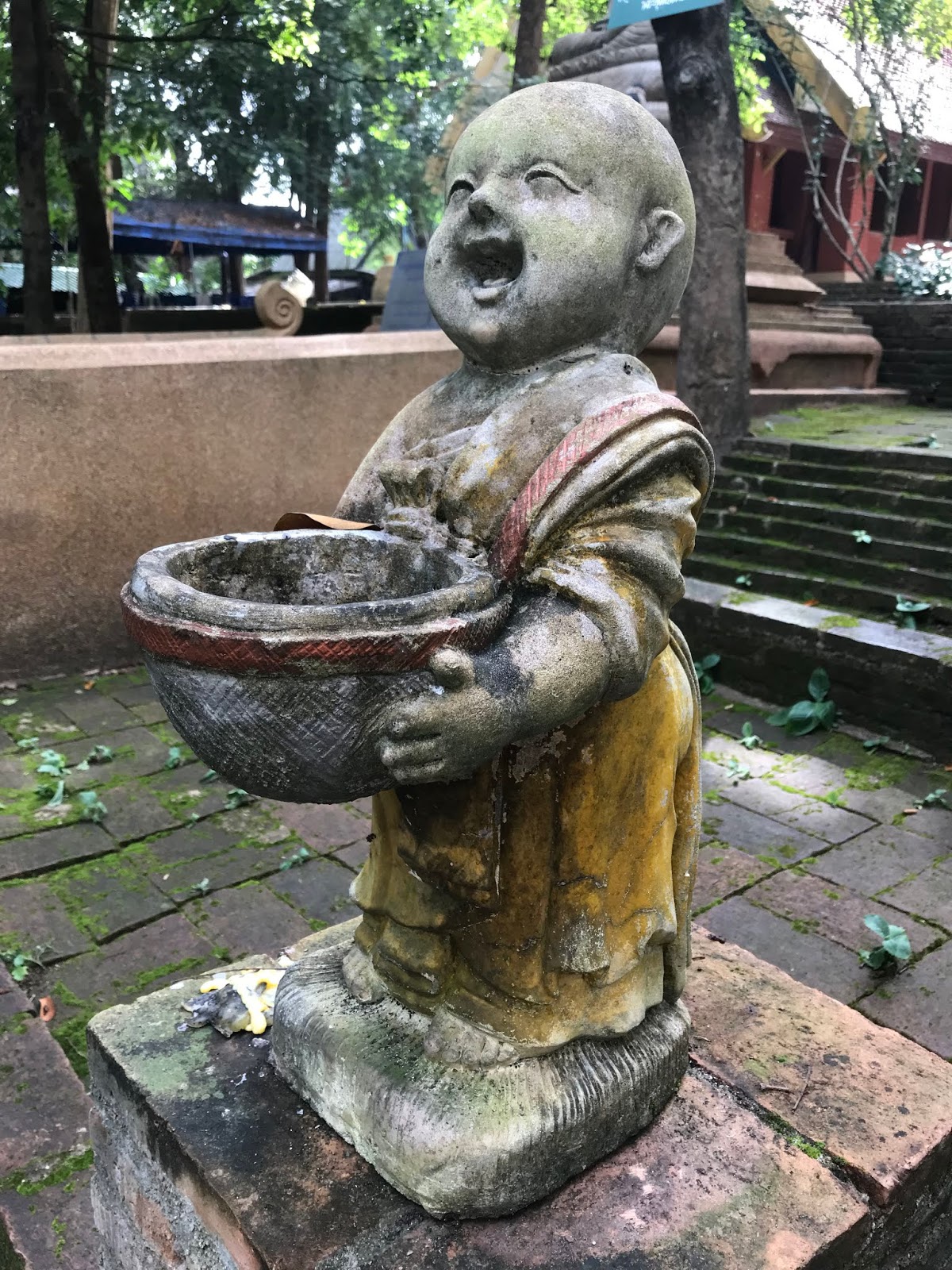
Cute little monk statue at forest temple "Wat Umong" not far from the hospital.


Tamarind fresh from the tree!


Happy to be wandering through the medicinal plant garden at CMU. 


One of many "wisdom signs" at the local temples.


Tuesday, September 25, 2018

So Much to Learn

Sometimes I think about the fact that I will never get to learn everything that I hoped to learn in this one lifetime. Even if I were to live in Thailand for another 5, 10, 20 years and get a Ph.D. in Thai studies there would still be much to learn. It is quite a humbling experience. Although I continue to study Thai language and try to learn about the culture and society there is still so much that I do not know and, as an outsider, likely never will. 

One area of learning that has challenged and interested me a lot these last few weeks has been the topic of medical ethics in a global context. The faculty member that I am working with here expressed interest in the topic of medical ethics before I came to Thailand. After arriving in Thailand I learned that clinical ethics committees and ethics consultation services do not yet exist here, which I learned is the case in many areas of the world outside the US and Europe. But as medical technology continues to develop and globalization continues, there will be more and more ethical dilemmas encountered in clinical practice, especially related to end of life care.

During a recent palliative care conference at CMU (“Suandok Palliative Care Conference”), faculty from many hospitals in Thailand decided that one of the priorities going forward is to begin to develop clinical ethics committees in Thailand. My faculty mentor found an article that demonstrated a needs assessment for clinical ethics services in Tehran, Iran and we decided to design a similar survey here. I am fortunate to have the opportunity to do rounds with the ICU and palliative care teams in the mornings here which has helped me to gain a better understanding of the culture, especially end of life care issues, although as mentioned above I still have a great deal to learn.

In doing some of the background research for this project I learned that clinical ethics committees were first developed in the 1980s in response to the growing number of ethical dilemmas that resulted from the rise in medical technology, consumerism and healthcare costs. They are now a requirement in all hospitals in the U.S. but in many parts of the world they are just starting to develop. It is interesting to think about this in the global scheme of “development”. Many countries that were previously considered to be “low resource" now have more and more technology and infrastructure and so are facing new challenges, and this is likely to continue in other countries.

So the question arises, how do you create ethics committees to meet the needs of each specific country? Every country has a unique culture, language, history and set of religious traditions and as a result will need a unique approach to solving ethical dilemmas. I came across a number of interesting articles about this, some that specifically compared Thai and American approaches. This challenged me to reflect critically on the approach we take in the U.S. to medical ethics, specifically how narrow our approach can sometimes be. 

In our medical schools, students are taught to analyze all ethical problems through the lens of four principles - beneficence, non-maleficence, autonomy and justice -  but this is not the only way to approach ethics. Everyone has a unique ethical framework that is influenced by their culture, upbringing and religious background but unfortunately few medical trainees have the opportunity to discuss ethical dilemmas through their own lens. Given the incredible diversity in our culture I would argue it is important to allow trainees to explore other approaches to clinical ethics.

And of course as the discipline of clinical ethics develops in other countries around the world we need to make sure that we refrain from making “Western” ethical frameworks the only way to approach ethics. Much of the work that we do in global health puts us at risk of creating unequal partnerships with other countries given the often vast differences in resources. This can result in loss of local culture and values. In Thailand for instance, although the country was never formally “colonized”, many scholars argue that there was “semi-colonical” relationship with the Western countries that has resulted in significant external influence. 

I think that before we travel abroad we should spend time learning about the culture and history of the country we plan to visit, especially the relationship that the U.S. has had with that country. We come from a very privileged place in the U.S. and unfortunately this can result in significant power differentials when we engage in cross-cultures collaboration. Rather than thinking about what we will bring to another country or how we will change the situation, we should start by asking ourselves what we can learn from the them and keep an open mind and heart in the process. I know that I have learned a great deal from Thailand over the years.  

Sending warm wishes from ประเทศไทย,

Megan

*Here are a few photos, mostly from around CMU campus...


View of Chiang Mai city from my apartment in the morning. (สวยมาก ๆ)


One of my favorite temples at sunset, "Wat Suandok", a short walk from campus.


Bells at Wat Suandok. In the evenings I can hear the monks chanting. (เงียบสงบ)


Bridge at a park just off of campus. I liked the contrast of the red railings with the bright green trees.


Medicinal plant garden during the rainy season - lovely but so many mosquitoes! (ยุงมากเกินไป) Watch out for dengue!


Bathroom wisdom. I found this sign in the hotel bathroom in Khon Kaen. 

Friday, September 14, 2018

Bangkok and Mae Sot

I was fortunate to participate in a workshop with many other UMN faculty in Bangkok shortly after I arrived in Thailand. The workshop was supported by the CDC, the International Organization for Migration (IOM) and the U of MN and was designed to improve physical exam skills among IOM physicians. Some of you might be wondering what exactly is the IOM and what kind of work do they do? I first learned about the IOM through my continuity clinic at the Center for International Health. When new refugees arrive to the clinic they bring their IOM paperwork which includes documentation of a pre-departure medical exam. This “overseas medical exam” as it is sometimes referred to is required by U.S. law for all refugees resettling in the U.S. For the last year or so, the U of MN has been involved in developing training sessions around the world (including Uganda in May 2018) that include didactic sessions and clinical simulations to better standardize and improve the physical exam among IOM physicians. 

It was a very rich and meaningful experience to meet and interact with physicians from all over the world (from Egypt to Pakistan, Nepal, Indonesia, Turkey, Ukraine and more), all of whom share an interest in refugee healthcare. There was a moment where I had a flashback to this book that I loved as a child called “Children Just Like Me” which tells the stories of children from all walks of life in dozens of countries and wondered if perhaps that had been a foreshadowing of my future career interests. 


"Training of trainers" (ToT) group from UMN, CDC, IOM at hotel in Bangkok.

The group of trainers affiliated with the U of  MN included 8 physicians, 5 nurses, a psychotherapist, medical interpreter instructor and Doris Duke fellow. Most of our time was spent doing clinical simulations to practice a newly standardized physical exam checklist but there were also session on debriefing, interprofessional teamwork, pediatric development and pediatric nutritional assessment. I gave a case presentation and lecture on medical errors and interprofessional communication based on the Ebola case that occurred in Texas in 2014. It was a nice opportunity to more about medical errors, especially in the setting of diseases with public health significance. 

After spending two and a half days in Bangkok most of us flew to Mae Sot where we toured the Mae La refugee camp, Mae Sot Hospital, Mae Tao Clinic and the Mae Sot IOM clinic. In Minnesota we have a significant number of Karen refugees from Burma, many of whom come from the Mae La refugee camp so it was a special experience to be able to tour the camp and learn more about the history and challenges these people have faced. Mae La refugee camp has been in existence since the early 1980s and is the largest refugee camp for Burmese in Thailand (over 90% Karen people). Residents of this camp were allowed to register for refugee status with UNHCR only until 2005, thereafter they are not eligible to register and thereby resettle (this is a complicated situation that I will not elaborate further but you can research yourself) and the result is that the refugees have very limited options: either stay in the camp where they are relatively protected from arrest and removal to Burma but with minimal freedom to move and work, or attempt to live and work outside the camps but do not have legal status and everything that goes along with that privilege (e.g. work permits, health insurance).  


UMN ToT group in Mae Sot, getting ready to drive out to Mae Tao Clinic.

The IOM physician that we met in Mae Sot told us that the camps will be facing significant budget cuts in the coming year, up to 80%. Currently the hospital within the camp is funded largely by the International Rescue Committee (IRC) which is a U.S.-based humanitarian aid agency. You can explore their website to learn more about their work and donate if you are interested in supporting their cause. The topic of refugee health and human migration has been in the news a great deal lately with the ongoing conflicts in Burma, Syria and East Africa. I would encourage you to try to learn more about these situations and how you can help, including locally in Minneapolis-St. Paul. Here are two resources I came across in the last year that I would recommend to this interested in this topic:
  1. Movie: Human Flow
  2. Book: Tears of Salt
*We are also fortunate to have two events happening in Minnesota in the next few weeks related to mobile populations including refugees: 

(1) Travel and Tropical Medicine Seminar (TTMS): Mobile Populations & Implications, September 19th from 6-8pm at Ben-Pomeroy Student Alumni Building on U of MN St. Paul Campus, you can register here.

(2) Lives and Challenges of Refugees, Migrants, and Displaced People Along the Thailand-Burma Border: A Talk with Dr. Cynthia Muang, October 4th from 6:30-8pm at Wilf Family Center Auditorium, Masonic Children's Hospital, more information here. 

After the trip to Mae Sot, I flew back to Chiang Mai with Dr. Brett-Hendel Paterson and Dr. James Nixon where we met with faculty at Chiang Mai University Faculty of Medicine to discuss areas for continued collaboration between UMN and CMU, with a special emphasis on medical education and palliative care. I will share more about the projects I am working on this year with reflections on life in Chiang Mai in my next post. 


Dinner with Dr. Nixon, Dr. Hendel-Paterson, Dr. Patama (Palliative Care at CMU) and resident Bim who recently did an elective rotation in Minnesota.

~ Megan

Extras:


We found this sign after going through security at Don Meuang Airport on Bangkok. We thought it might be nice to incorporate something like this into resident work spaces. 


Sign on the wall in local restaurant, a quote from the Dalai Lama.


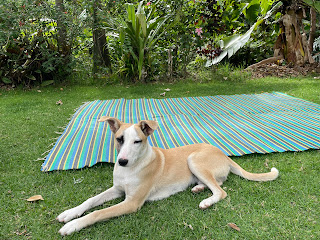
I was told this is technically a parasite of the tree but I feel like it worked very well as a ponytail.


Thursday, September 6, 2018

Chiang Mai - Going Home

I recently received a book for my birthday called “Going Home” by the well-known Vietnamese Buddhist monk Thich That Hanh. I started reading it on my flight from Minneapolis to Seattle en route to Chiang Mai, Thailand. During this flight I also started to think about what I might write about in my first blog post and quickly this idea of “going home” entered my mind. 

It was nearly 10 years ago that I first came to Thailand. Shortly after graduating college (3 days to be exact!), I moved to Chiang Rai, the northernmost province in Thailand to teach English. The University that I taught at (Mae Fah Luang) was breathtakingly beautiful, located ~30km north of Chiang Rai city, and about an hour from the border with Burma and Laos. It was a magical year for me. I had not spent much time outside of the US before this and I was struck by how incredibly at home I felt in Chiang Rai. It was quiet, rural, warm and inviting. I learned many things in Chiang Rai, among them how to live at a slower pace of life and how to hold things more lightly (my students told me more than once, “teacher, don’t be so serious!”). 

When I returned to the US to start medical school the following year, I asked my advisor at one of our first meetings when I could return to Thailand. It was not until two years later that I took a 3-week trip to Thailand where I visited friends in Chiang Rai and volunteered at a mindfulness-based recovery center called New Life Foundation. I started my internal medicine rotation shortly after returning from Thailand that summer but decided that I would take an extra year during medical school to return to Thailand through our Flexible MD program. During that year (2013-14) I spent 8 additional months in Thailand doing rotations at Chiang Mai University hospital (Hem-Onc, Family & Community Medicine), doing a research project related to palliative care in patients with spinocerebellar ataxia in a rural area and completing 8-weeks of Yoga teacher training.

When I started residency, many people thought I would pursue global health given my previous experiences in Asia. However, this was not the case for me right away. I decided that I wanted to consider other things and keep an open mind as I started this new phase of training. But, as you may have guessed, I was quickly drawn back to the global health community. A very wise mentor in medicine told me early on in medical school that it is important to “find your tribe” in medicine because without this it can be a difficult and isolating road. He did not define exactly what he meant by “tribe” but I took it to mean the people with whom you resonate, share values and feel inspired by. For me, these were the people in the global health community. I found these people to be compassionate, service-oriented, talented and yet very humble; they were people who saw medicine as more than a job - who advocated for vulnerable populations such as refugees and immigrants, stood up for social justice and human rights, and deeply valued human connection. 

It was for many of these reasons that I decided to do this global health chief resident year. I think it will be a unique opportunity to connect with people all over the world who are passionate about improving the health of all people and working towards creating a more just and compassionate society. I also look forward to supporting those who are part of the global medicine program at the U of MN specifically through education and community building. As I mentioned above, I am fortunate to be able to return to Thailand - my “second home” - for 6 months this year. The U of MN has a long-standing relationship with Chiang Mai University Faculty of Medicine that includes resident and medical student exchange programs and collaborative research. I continued to be interested in end of life care and am grateful for the opportunity to spend time in the ICU and palliative care services and work on an educational project related to palliative care in global health. 

I will try to post on this blog at least every couple of weeks while I am abroad. Throughout my travels and my life, writing has been something that I have enjoyed and found very helpful. Each time that I lived in Thailand previously, I kept a blog (I'm happy to share the links to these if you are interested) and I look forward to doing the same this time. I feel that writing and reflection are important aspects to our work as healthcare providers but unfortunately we often do not have time for these with our busy schedules in the US. My co-global health chief resident Shemal Shah also plans to post on the blog while he is in Tanzania starting in January. We hope that you can learn more about Thailand and Tanzania through our writing and that our work can foster continued collaboration between the U of MN global health community and our partners around the world.  

Sending warm wishes from Thailand,

~ Megan 

Photos:


Maharaj Nakhorn Hospital (locals call "Suandok").


Chiang Mai University Faculty of Medicine


With one of many elephants around campus; favorite animal in these parts. ;-)


Saturday, December 19, 2015

Nitakumisi

Jambo from Arusha! It has been an incredibly fast and wonderful month since I last wrote. I had the opportunity to climb Mt. Meru (14,977ft), the idyllic volcano that keeps watch over the city of Arusha. As one approaches the summit, Kiliminjaro looming in the distance seems to grow taller and mightier. We were blessed with a beautiful snow at the top and the sun revealed an epic coating of snow on Kili reflected on the horizon. I also traveled with Flying Medical Service for preventative care clinics, which they hold in remote Maasai villages in Northern Tanzania. We travelled to Simanjiro region loaded up with preventative medicines and vaccines, mostly going to pregnant women and children of the villages. The whole experience was simply incredible and I greatly admire the mission of Flying Medical Service to reach the rural inhabitants of Tanzania, who suffer from drastic disparities in health care. Work on the internal medicine ward at Selian was busy and extremely fun, with some new interns moving over from ALMC. We had a breath of fresh air with 2 visitors from Minnesota, Ron and Colleen Johannsen (a cardiologist at Hennepin County Medical Center and an experienced cardiac ICU nurse, respectively) who came to teach cardiology, particularly echocardiography and EKG. They gave us some fascinating perspectives on rheumatic heart disease, their major project of interest, and plan to return for regular teaching in diagnostic skills, which are so greatly needed in Tanzania.
For this weeks Swahili lesson, I chose a phrase that is slightly interesting, but mostly selected for it’s timeliness. Nitakumisi, as some might be able to guess, simply means, “I will miss you”. It is not a particularly deep phrase, it can be used lightly, such as when you miss a day of work and you are welcomed back the next day. But like all sentimental phrases, it is only as deep as the relationship it represents. If it is used casually with a casual acquaintance, it will, of course, have little meaning. But when the roots run deep into the soil of common experiences and shared goals, it stirs a myriad of emotions. In the past month, after a whirlwind of busyness at the hospital and fun social events about town, I found myself suddenly at the end of my time in Arusha. I had known that the end would come eventually, but I had no idea what it was going to feel like or even that it was coming so soon. Saying goodbye is never easy, especially at the end of a defining chapter of life. But I have been imagining for a while: what am I going to miss most about Tanzania? I know for sure that I will miss my friends and colleagues, who have so graciously welcomed me into their homes, lives, and work. I will miss the beautiful children that I pass by every day on my way to and from work, even when they shout “good morning teacha” at all hours of the day or sound the “mzungu” alarm (shouting mzungu with the volume and frequency of a car alarm). I will miss the Maasai families in their red and blue shukas, adorned with beads, who would move heaven and earth to care for their sick loved ones. I will miss the serene landscape and epic mountains of Northern Tanzania. I will miss participating in the amazing efforts that others have poured their lives into: Selian, ALMC, Plaster House, Flying Medical Service and others. I will miss the pace of life, walking to my destinations, and greeting everyone I pass.

I am comforted when I think about the beautiful memories that I have, especially looking through the pictures that capture a piece of the experience that I had. I am filled with joy when I think about the successes that I shared with my colleagues: patients who recovered, families who were grateful for our service, and colleagues receiving new opportunities and dreaming big for the future of their country. I am reminded that Tanzania is a land which is not as far from my own as I once imagined. As I think about the phrase, nitakumisi, I see the blending of Swahili and English words and grammar. It combines east and west, uniting the influences of Bantu origins of Africa and “Swahili-fied” English. I see in it that our lands are not so distant that they cannot exist together, that our cultures so different that they cannot be understood one by the other. I will hold Tanzania in my heart as I return home. When I will return, only God knows. But until then, I will miss you.

Ryan

Two weeks in

*disclaimer* This was written a few days ago and now being posted!   Mambo from Arusha! It has been two weeks into our four month long stay...